

Detailed estimating from concept to GMP
The conceptual budget is only the beginning. Zebel carries the same estimate forward as the project develops, from early concepts through detailed estimating and GMP, with line-item detail, GRs/GCs, value engineering, analytics, and reporting in one platform.
Key capabilities
- AI drawing review
- Detailed estimating
- General requirements / General conditions
- Value Engineering / Alternates
- AI estimate QC
- Togal.AI integration
- Native analytics
- Reporting


AI drawing review, right where you estimate
Review and annotate project drawings directly in Zebel, then associate annotations with budget items so the information you need stays within the estimating workflow.
Drawings linked to the budget
Associate annotations with budget items for quick reference while building the estimate.
An AI walkthrough of the project
Zebel AI automatically annotates project drawings and creates a walkthrough highlighting the important details, helping estimators understand the basics of hundreds of pages in minutes.
One estimate, from early budget to full detail
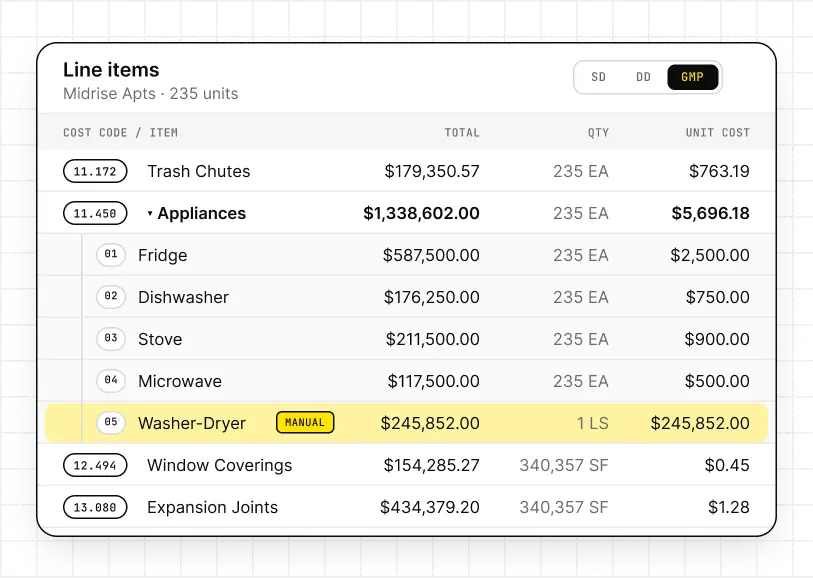
As the design develops, quantities, unit costs, and line-item detail change with it. Zebel keeps that progression in one estimate, from the conceptual budget through SD, DD, and GMP, without rebuilding the work at every stage.
Togal.AI takeoff integration
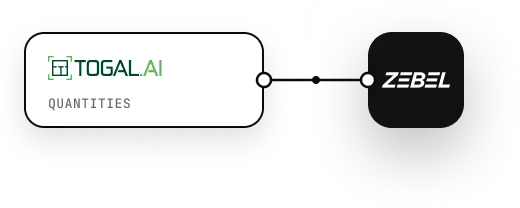
Quantities from Togal.AI flow directly into Zebel, reducing manual data entry between takeoff and estimating
GRs/GCs that move with the project schedule
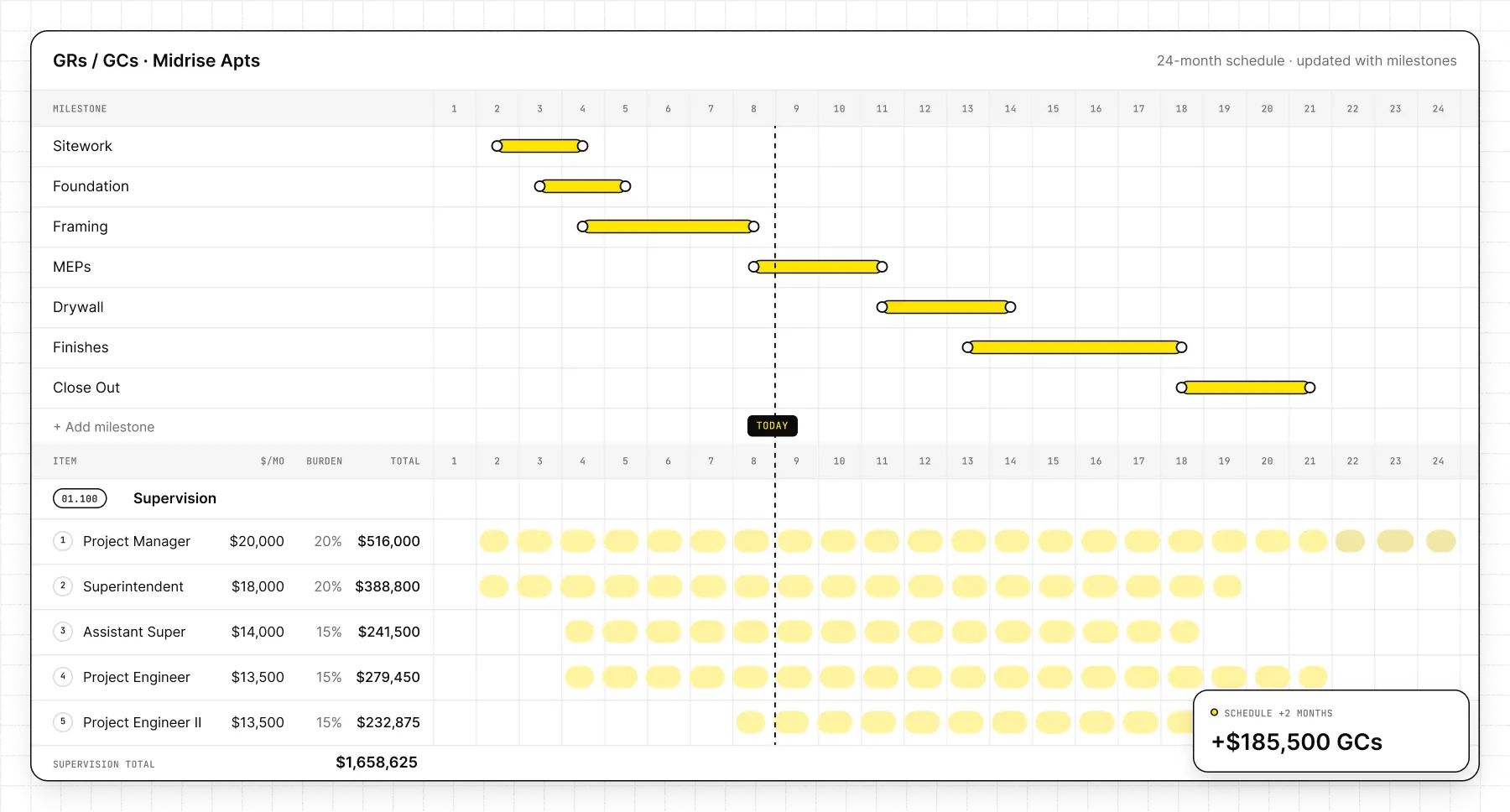
Project duration has a direct impact on General Requirements and General Conditions. Zebel ties milestones, staffing, salaries, and time-dependent costs to the schedule, so the budget reflects what the project actually requires.
Value engineering without the side spreadsheet
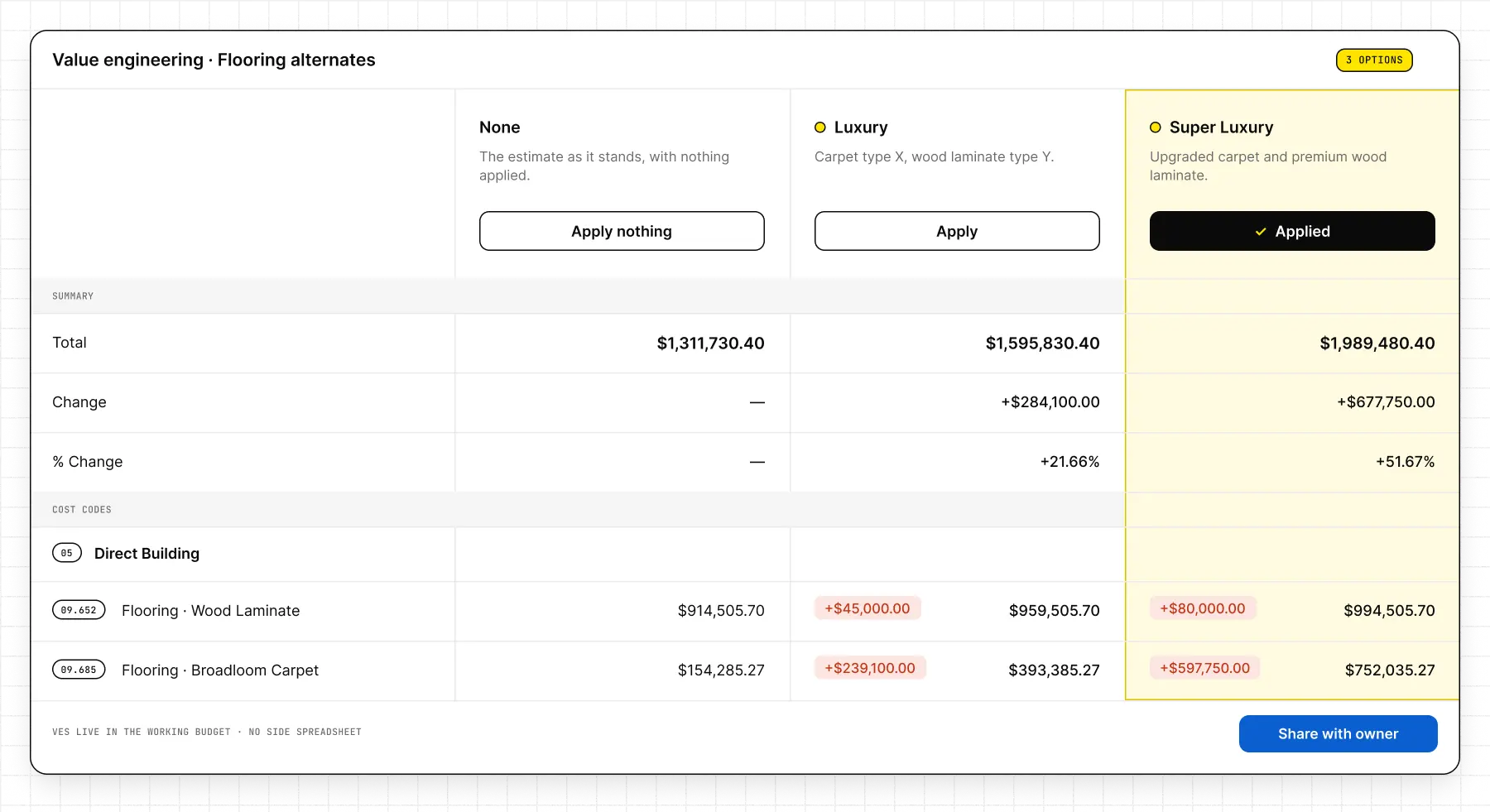
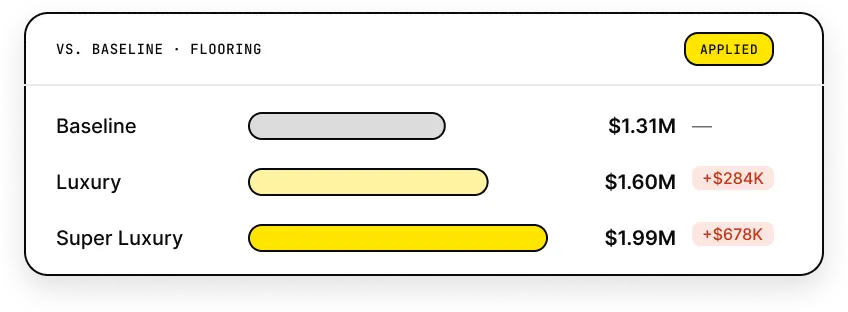
VEs and alternates stay inside the working budget instead of being tracked in a separate file. Each option can be measured against the baseline, with its cost impact visible while the team and owner evaluate the tradeoffs.
Every option next to the baseline
Total cost, dollar change, and percentage change make the impact of each alternate clear. Options stay easy to track and report to clients without maintaining a separate VE spreadsheet.
AI estimate QC before the estimate goes out
Zebel reviews estimate structure, scope coverage, and historical patterns to identify potential issues early. It cross-checks against your cost database and past projects to flag risks and gaps before the estimate moves forward.
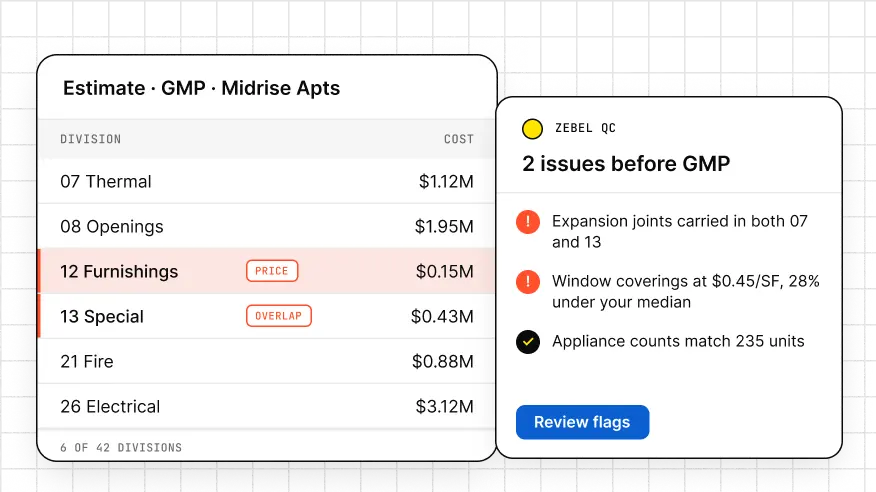
Missing scope and overlaps
Identify potential scope gaps across trades and overlapping responsibilities that may otherwise go unnoticed.
Inconsistencies and unusual pricing
Flag mismatches across trades, quantities, and assumptions, along with pricing that falls outside historical patterns.
A clearer view of the entire estimate
A final number can look right while something underneath it isn't. Zebel gives estimators different ways to review the budget, investigate cost drivers, and check accuracy and completeness before the estimate goes out.
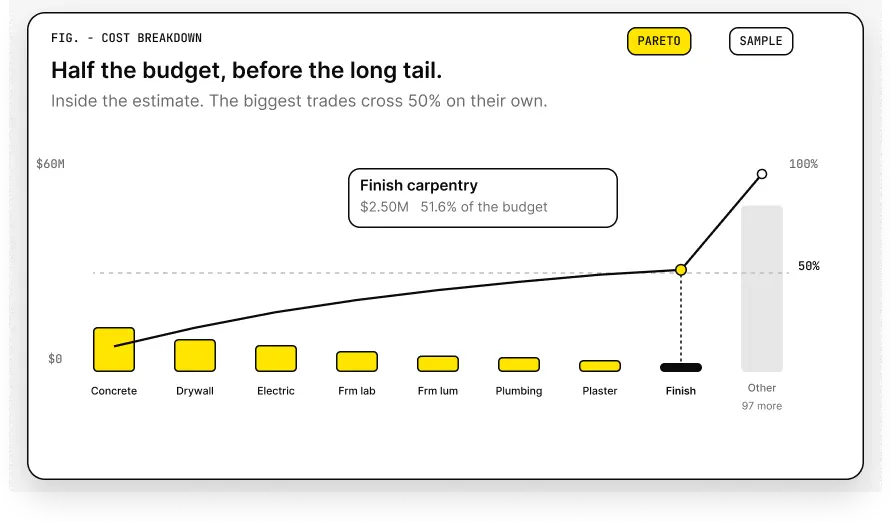
The budget from every angle
Costs can be viewed by CSI code, phase, trade, or custom breakdowns, making gaps and unusual cost concentrations easier to find.
Analysis without the Power BI detour
Relevant analytics live inside Zebel, so the estimate doesn't need to be exported and rebuilt in another tool just to understand the numbers differently.
What used to take us a week or more to produce a conceptual estimate has been streamlined into a matter of hours. Our repeat customers know of our new capability and it is helping them focus on viable deals, using our reliable cost data, and giving us more work Opportunities.
Jon Reid
UrbanCore Construction
More estimating capacity from the same team
Zebel has definitely helped us do more estimates with less people and know that they're going to be more accurate.
Integrating AI into pre-construction in our business with Zebel has set us apart from our competitors because it is so cutting edge and it's helping nail down the details.
It's helped us with our win rate and strengthen the relationship with clients, because they're able to come to us early and then we can help them work through the process from very early on
Latest from our blog
Understanding ITBs in Construction
If you’ve ever asked, “What is an ITB in construction?”—you’re not alone. An Invitation to Bid (ITB) is a foundational document used throughout the construction industry to initiate...
Construction Work Breakdown Structure (WBS): The Complete 2025 Guide
Managing a construction project—whether it’s a residential build, commercial complex, or public infrastructure—requires meticulous planning.
Contractor’s Guide to Construction Bid Types
Understanding the various bid types is crucial for success when securing contracts in the construction industry. Navigating these bidding processes effectively can make all the difference...
Top Tips for Mitigating Cost Overruns in Construction Projects
Construction projects are known for their complexity, and even the best-planned ventures can experience cost overruns. These overruns aren’t just financial nuisances
A better way to carry an estimate forward
From the first conceptual budget through detailed estimating and GMP, Zebel keeps the numbers, decisions, and analysis connected as the project develops.
Join Our Newsletter
